Trucks out on the circuit — brushing & brickwork reach to reachInsured • Crew Kept All Year • Mon–Sat 7–7Call (781) 449-4794
Needham Heights • Birds Hill • Charles River Village • The Junction
The Charles Bends Around This Town on Three Sides. Your Brick Shouldn't Feel a Drop of It.
A town ringed by its river learns early what water does to masonry, and this trade is built on that lesson: flues brushed back to honest clay, joints renewed to their full depth, caps set before the hard frosts — and the line sounded by a working mason, Monday through Saturday, seven to seven.
Eight Trades in the Book, One Hand Holding the Pen
Nothing here gets farmed out downstream. The mason who sounds your chimney prices it, works it, and signs for it — and a figure spoken at the put-in still reads the same at the take-out.
Full-Reach Flue Brushwork
Rods walk the brush the flue's entire run, repeated reach by reach till the tile gives up nothing further — and every ounce freed leaves the house shut inside a steel drum.
The no-fee survey opens every file — and where a buyer, an adjuster or a stubborn draft demands moving pictures, the lens goes down the run and brings back the proof.
Where frost has racked the top of a stack out of true, we take it down to courses that still hold their line and carry it back up square — beds filled solid, faces matched to the house, a crown with real pitch.
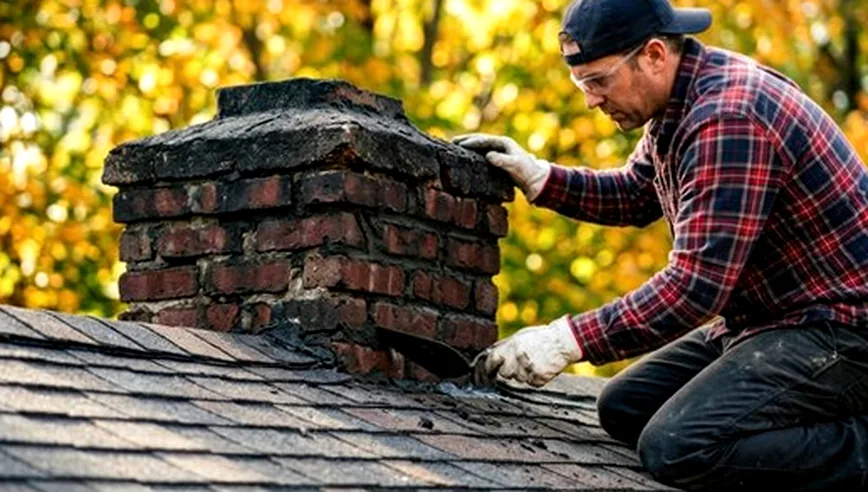
A wet New England year works at every joint from the face inward. We rake the failed depth out square, drive fresh mortar to the very back of the joint, and tool it weather-tight — color matched, and gentler than the brick it binds.
An open flue in a river valley drinks every storm that passes. Our caps are heavy-gauge stainless anchored into brick with the strength to hold them, set over crowns dressed back to a clean, shedding slope.
A brown ring on the ceiling near the stack is a seam upstairs filing its resignation. We run controlled water till the guilty joint declares itself, then rebuild that detail to outlast the roof around it.
Split tiles, naked brick, or a flue left behind by a boiler swap — one unbroken stainless run, gauged to the appliance at its foot, carries the exhaust clear and keeps the masonry out of the conversation.
Fire-tired back walls come out and go back in proper firebrick, throat and chamber faired till the smoke stops arguing, gas appliances leveled and bedded — the hearth standing square to its work again.
Reading one of these at your place?Sound it in while it's a single mark. The mason will level with you — let it ride to a quiet week, or set it first on tomorrow's route — and the choice stays on your side of the water.
The Survey Line
Four Stations Down the Same River, Every Single Job
The stations never swap order and none gets floated past — that's the whole trick to numbers that hold their depth.
1
The Put-In
Seven to seven, six days running, the phone finds a mason. Tell it your way and take a date.
2
The Dry Survey
Hearth to cap-stone, the stack read station by station, verdict spoken whole — and the meter never installed.
3
Depths on the Chart
Repairs priced one by one, each figure anchored where it's written — pressing matters upstream, patient ones below. Nothing swells later.
4
The Take-Out
Work finished to its spec, the site left drier than we found it, the warranty signed into your hand at the door.
Before the River Ices Over
When the First Freeze Hits, Half of Norfolk County Calls the Same Week. Beat the Current.
One cold night lights a thousand fireplaces, and the calendar drowns for a month afterward. Sound us out in the soft-weather months and the brushing, the cap and the pointing all land at an easy pace — with the pick of the dates still on the chart.
Jobs that earned their nail — brushings, caps, stainless and fresh courses from both banks of the river.
Crown floated clean — the HeightsHose walked over the ridgeTop coat struck off — Birds HillCap seated, town laid out past itFace brushed for the pointingHearth masked before the rodsGas set out for its serviceInsert leveled for its stainlessCourses standing true — River VillageStainless settled home — Dover
The Reach Map
Out From Reservoir St, Both Banks, Every Reach
Home water is 02494; the standing circuit reads Needham's own corners first, then crosses to the towns along the river's far side.
Needham Heights
Birds Hill
Charles River Village
The Junction
Dover
Westwood
Dedham
Medfield
Norwood
Sherborn
Millis
Walpole
Moored past the map's edge? Call (781) 449-4794 — a day's worth of work has stretched the circuit before.
Asked at the Landing
Needham Chimney Questions, Sounded to the Bottom
A full survey of the chimney for zero dollars — where's the hook?
Nobody's hidden one. The visit reads the firebox, damper and smoke shelf close up, walks the flue its whole reach, and finishes over the roofline with the crown, the cap, the screen and every flashing seam. You hear the state of all of it, out loud and in order, before we drive off — and no invoice follows. Two things in this shop cost money: the chart, which is the survey drawn onto paper with photos and one unmoving figure per repair at $149, made solely when you request it, and whatever repairs you choose to commission. A good share of surveys close with a handshake and an empty ledger.
Rang you at half past eight at night — machine picked up. What happens to my message?
It rides first current out. At seven the next working morning the saved calls get rung back in the order the machine took them, ahead of the fresh day's traffic, and anything Sunday leaves on the tape opens Monday. A mason holds this line from seven to seven, Monday into Saturday; past those hours it's the machine, and we print that fact rather than dress it up. One rule stands over every message: visible flame, smoke moving into the house, or a carbon-monoxide alarm sounding is a 911 call from the sidewalk — ours comes after everyone's out.
Our 1950s house has a second little chimney off the basement nobody uses. Leave it be?
Have it read once before you decide. Those small second stacks all over the postwar streets usually served a basement incinerator or an old coal-to-oil setup, and retirement hasn't necessarily been kind to them: open tops drink rain straight down the core, unlined brick wicks it sideways into framing, and a flue that shares the chimney mass with your working one can pass damp and odor across. Some earn a cap and a sealed top and go back to sleep safely; some are quietly wrecking the wall they live in and deserve topping down below the roofline. The survey settles which one yours is at no cost, and either answer beats not knowing.
The ivy on our chimney took thirty years to look this good. Is it actually hurting anything?
Unfortunately, yes — and the better it looks, the further along it tends to be. Climbing vines hold a wet blanket against the brick after every rain, which is exactly the moisture cycle mortar hates, and their rootlets work into any joint that's begun to soften, prying it wider season by season. Up top, runners find the flue and the cap screen and choke the draft. The kind move is a staged removal: cut at the base, let the vine die back so the rootlets release, then strip it dry and read the joints underneath — never tear a live vine off, which takes mortar face with it. After that, repointing where it fed and a sound cap put the chimney back on its own terms. We'll give you the honest condition under the green at no charge.
If a ladder goes up and something goes wrong, whose policy answers?
This company's, start to finish. The crew on your roof is employed here year round — nobody picked up loose for a busy week — and both the liability coverage and the workers' compensation behind them are paid current, not certificates gone stale in a drawer. A mishap on your property lands on our coverage and never brushes your homeowner's policy. If you'd like the proof in hand before anyone climbs, ask while booking and the certificate is in your email before we're out of the yard.
Sweeping sounds filthy. What does my living room look like at the end?
Like nobody came. Before a single rod comes through the door, drop cloths bridge the walk-path, the hearth mouth gets shut in behind taped poly, and a HEPA-sealed vacuum sets a current flowing into the fireplace that runs until the work ends — so what the brush knocks loose travels one direction, down and into the drum. All the brushing happens behind that barrier. Budget roughly an hour for a common flue; the standard when we pack up is that the clean clay, not the room, is the only evidence of the visit.
Gas logs since 2019, real wood twice a winter before that. Do we still owe the flue a yearly look?
Yearly, yes — the fuel changed what builds up, not what can go wrong. A gas log set deposits little soot, but its vapor is wet and slightly corrosive, and a flue built for wood handles it badly over years: joints soften from inside, tiles shed, and the damper you now keep cracked open invites weather and nests down a warm, dry run. The old wood years also left their creosote behind, still flammable, still sitting there. One look a year reads liner, damper, cap and crown together and catches each of these while it's a note on the chart instead of a repair. Skipping it saves a phone call and risks a masonry bill.
We're across the river in Dover — does the truck come that far?
The truck crosses that bridge most weeks. Home base is Reservoir St in 02494, the standing routes take in Needham's own corners — the Heights, Birds Hill, Charles River Village, the Junction — and the circuit runs through Dover, Westwood, Dedham, Medfield, Norwood, Sherborn, Millis and Walpole. Anything past that ring, put it to the mason on the phone: a day's worth of work has stretched the route plenty of times.
The Reservoir St Landing
One Call and You're Talking to the Trade Itself.
No switchboard sits between you and the work. The voice that picks up can gauge a job from the telling of it, calendar open at the elbow.
The boathouse115 Reservoir St, Suite B Needham, MA 02494
The circuitNeedham's corners & the towns on the far bank
When the line is sounded
Mon – Sat
A mason on the phone straight through, seven till seven
Sunday
Quiet water — the machine moors you first in Monday's queue
A working mason holds this line
Put It However It Comes. Hang Up Holding a Date.
The seam that opened over the winter, the cap that rattles on windy nights, the grit collecting on the hearth rug — describe it any way it comes. By the time the receiver goes down you'll hold a fair reading of how urgent it is, a figure you can plan against, and a line on the route sheet.